|
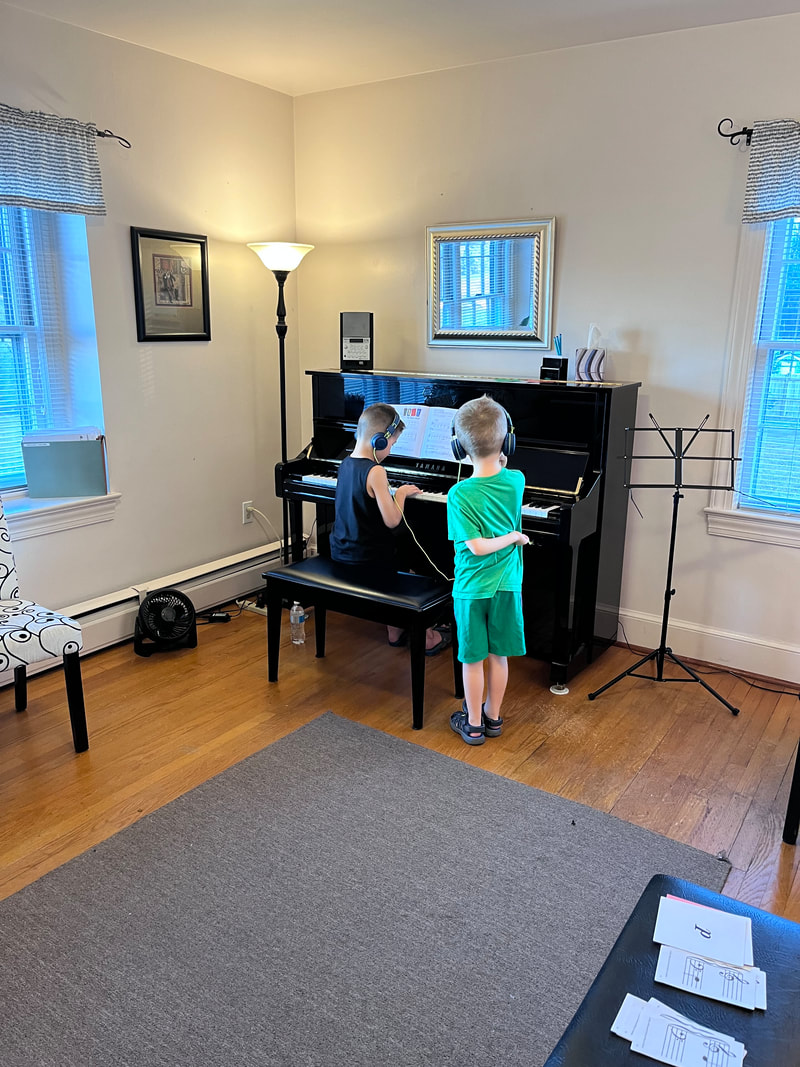
I'm frequently questioned by parents if our Accelerated Lesson Program can compete with traditional private music instruction. The deeply imbedded natural assumption seems to be that a one-to-one style lesson will provide the highest quality instruction, and yield the greatest results, while also helping the student with any attention or confidence deficits. Our lessons at The Music Studio are quite different from the private lessons typically offered through music stores and home-based teachers. However, having taught privately (the one-on-one type lessons) for 25 years, and seeing the extremely poor survival rate of students who study that way....I made a change in lesson structure that would ensure success, and have been teaching in this improved format for the past 10 years! Our lessons allow each student to progress individually within a small group setting -- and, what students will experience at a complimentary tryout is almost exactly how a regular lesson would go. A seasoned class moves very energetically, and will typically have 4 to 6 students! Although I often describe our lesson format as being different from "traditional" lessons, our actual teaching method is traditional/classical - where students learn to read music and rhythm (not by ear), and are guided chronologically through classical music theory. All our instructors and assistants are also classically trained musicians. So, the "what" in our teaching does remain true to traditional western music. Students continue playing the entire session, and may "pass" a song as soon as they are able to play it correctly and fluidly. This knocks out the difficult part of practicing before they leave the lesson, and lets them move at their most comfortable pace (their pace or progress is never held back by the other students). The biggest benefit to this format is the sightreading -- the ability to play through a brand new song almost perfectly, without prior practice. We cover A LOT of music in a 60-minute session, so by the end, they've read through and mastered 10 to 15 songs. The high sightreading skills lead to independent learning and a big spike in confidence. During tryout lessons, I enjoy noticing somewhat timid students become rapidly comfortable with looking at the next new song without me providing too much instruction on how to start or what to look for (this is fabulous, as music is written to provide the performer with all the answers/secrets, so when students get to the point where they start to seek solutions within their music -- a musician is born!). We have fun with it...the students love to keep me hopping from piano to piano as fast as they can learn a song :). And, usually, at the end of the lesson (as long as we've accomplished a lot of playing), we'll take a little break and sneak in some theory, ear training, or try some ensemble or percussion playing together. Our students fly through lesson books...by comparison to 20 or so years ago, their progress rate has doubled or tripled, and on average they continue with lessons well beyond their method books. Our students continue playing as adults, major in and have careers in music, receive college and local scholarships, and win competitions (we've had three winners play at Carnegie Hall in NYC). It's not required for students to pursue serious performing, and we do non-competitive performance events, too....but it's there if they aspire in that direction! And, this program can certainly get them there, if they want it. Although I'm a survivor of private lessons, and a 25-year veteran teacher of the "old school" one-to-one lessons...I'll never go back! The failure rate and student turnover are ridiculously high, and leave students with unpleasant memories of music and lessons. Instead, I choose to provide a lesson program that reinforces sight-reading, independent learning, and rapid progress...and produce student musicians who have the confidence to reach beyond what I can personally show them. Thanks for reading! Susan Experience our program for yourself....we'd love to have you visit our studio and sample a lesson, free of charge!
0 Comments
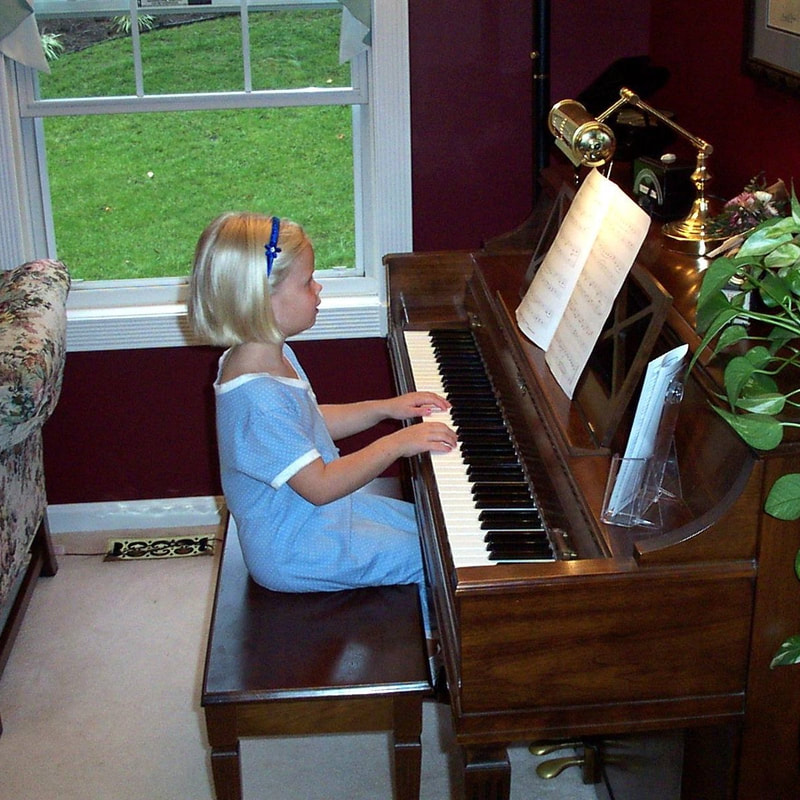 Should You Enroll Your Child in Private Piano Lessons? Only if you want them to quit. The more personal one-to-one attention from the teacher, the more successful the music lessons, right? Private piano lessons have been the tradition and gold standard for centuries, but we’d like to explore why it’s not the best instructional format for the majority of students, and is almost certainly finite. In my 35 years of teaching (25 of those years as a “private” one-to-one type teacher), I can honestly state that the majority of my private students had no complaints about the time spent in lessons – because they didn’t have to do anything! They could arrive at their lesson, explain how busy they’d been all week and couldn’t practice, and then ask me to provide something “new” to fill the time. All of them had become deficient sight readers, so anything new required me to present it to them by playing it, then dragging them slowly through, mostly by rote. After the lesson, I’d send them on their way with strict instructions to put in some practice time and come back more prepared. Yeah, right. The only thing accomplished during those private one-to-one lessons was reinforcement that showing up unprepared was going to be rewarded. It’s no wonder most students got bored, stuck at beginner levels, and parents frustrated that there was no practice going on at home. As a parent, you may have been told that private lessons offer more personal attention and therefore a higher-quality session and better connection with the student. As I mentioned above – they sure will! But, it’s that personal attention that sets your child up for failure, by creating dependency and underdeveloped sightreading skills, really poor practice habits, and will eventually lead to musical failure. Did you take lessons as a child? How long did you stick with it? When it comes to nurturing a love for music in your child's life, the fears and uncertainties of parents are understandable. We've all heard the stories of children starting piano lessons only to end up frustrated or quitting altogether. And, many times, parents tell us that they personally had unpleasant lesson experiences. We understand these concerns and have developed an innovative and unique approach to piano lessons that not only dispels these worries but also paves the way for long-term musical success. Independent Learning and Progress: Our lessons at The Music Studio are designed to empower your child by allowing them to make unlimited individual progress within a small group setting. We believe in fostering independent learning from day one. One of our key features is that students start sight-reading music as soon as they sit down for their first lesson. This approach gives them a solid musical foundation, and builds confidence in their own capabilities. Mastery Through Practice: We understand that frustration arises when students struggle with new pieces at home. At The Music Studio, our approach is to address these difficulties during the lesson, so students are never sent home with brand new music that they have to learn on their own. The challenging parts of new songs are conquered before the lesson ends. This way, there is no struggle at home, and parents won't find themselves in the position of having to re-teach assignments. In addition, our students learn to find the answers within their music, which is exactly the intention of the composer! Let’s Recap The Downside of Private Lessons: To set students up for success and unlimited progress, it's essential to address the limitations of private lessons. Private lessons inevitably create a dependency on the teacher, as a significant portion of lesson time must be spent on instruction, theory, or the teacher playing. At The Music Studio, our students spend the entire lesson playing, not the teacher. This unique (almost reverse) approach allows us to cover a wide range of music and move through lesson books at double the rate seen in traditional private lessons. Growing Future Musicians: Our current teaching approach, backed by decades of experience, has consistently yielded remarkable results. Our students have not only won awards and scholarships but have also become integral members of school ensembles, and some have embarked on successful careers in music. It's a source of immense pride that three of our students have graced the stage at the prestigious Carnegie Hall in New York City. These achievements serve as a testament to the efficacy of our teaching method. Even for those who choose different life paths, our instruction equips them to enjoy music throughout their lives and pass down this cherished tradition to the next generation. At The Music Studio, our mission is to empower students through strong reading skills, and to simultaneously take the worry out of piano lessons for parents. We've crafted an approach that encourages students to become not just musicians, but lifelong lovers of music, able to wisely choose what they listen to and play. Our small group lessons, focused on independent learning and ample playing time, have consistently proven more effective than traditional private lessons. So, when parents seek the best musical education for their children, trust the experience and success we've garnered in over 35 years of teaching. Join us on a journey of musical discovery that will shape your child's future and their love for music. Would you like to see for yourself how our lessons work? We'd love to have you visit our studio, meet, and sample a lesson free of charge. Click here for more information on our remarkable program, or schedule your tryout lesson today!
Learning the piano is an exciting journey that requires dedication, practice, and guidance from a skilled teacher. Many aspiring musicians wonder how much progress they can achieve in just one year of piano lessons. In this blog post, we will explore the key factors that contribute to your growth as a pianist within a year's time, focusing on practice time, lesson length, fundamental skills, sight-reading, repertoire, and daily engagement. Whether you're searching for piano lessons in Stafford, Virginia, or any other area, this guide will provide valuable insights for beginners seeking to make significant strides in their musical journey.
Practice Time and Lesson Length One of the critical factors influencing your progress is the amount of time you dedicate to practice between lessons. Consistent and focused practice is key to developing your skills as a pianist. As a general guideline, aim for at least 30 minutes to one hour of practice per day. However, keep in mind that the quality of practice matters more than the quantity. Ensure that you engage in deliberate practice, focusing on specific techniques or pieces, rather than mindlessly running through exercises. Additionally, the length of your weekly piano lesson plays a crucial role in your development. Typically, beginners start with 30-minute lessons, gradually progressing to 45 minutes or even an hour as they advance. Longer lessons allow for more in-depth exploration of concepts, repertoire, and personalized guidance from your piano teacher. Emphasis on Fundamentals: Note and Rhythm Recognition Building a strong foundation is essential for any aspiring pianist. Note and rhythm recognition form the backbone of your musical understanding. During your piano lessons, your teacher will emphasize these fundamental skills to ensure your progress. By focusing on note reading exercises and rhythm recognition drills, you'll develop the ability to read sheet music fluently and play with accurate timing. Your piano teacher will introduce various techniques and exercises to strengthen your note and rhythm recognition skills. These exercises may include sight-reading assignments, clapping rhythms, and playing scales to reinforce your understanding of music theory. These basics need to be deeply ingrained, so practicing these fundamentals regularly and consistently will significantly contribute to your progress over the course of a year. Developing Good Sight-Reading Skills Sight-reading is an invaluable skill for any pianist. It allows you to play music you've never encountered before with reasonable accuracy. During your piano lessons, your teacher will guide you through sight-reading exercises and introduce you to new pieces to practice this skill. To improve your sight-reading abilities, dedicate a portion of your practice time each day to sight-reading. Start with simpler pieces and gradually progress to more complex ones. Focus on playing fluently, without getting stuck on every note or rhythm. With regular practice, you'll become more comfortable and confident in your sight-reading skills, enabling you to explore a wider range of repertoire. This is typically a neglected skill, but extremely important since having great sight-reading ability will allow you to work through more music quickly. Playing a Variety of Repertoire Playing a diverse range of repertoire is crucial to your growth as a pianist. Your piano teacher will carefully select pieces that are appropriate for your skill level, gradually increasing the difficulty as you progress. Beginning piano lessons in the Virginia Beach area will expose you to various musical styles and genres. Exploring different types of music will enhance your technical skills, musicality, and overall understanding of the instrument. Your piano teacher will guide you in interpreting the music, understanding the composer's intent, and mastering the techniques required for each piece. Regularly performing pieces from different eras and styles will enrich your musical experience and expand your abilities. Playing Daily to Build Familiarity with the Piano Consistency is key when learning any instrument, and the piano is no exception. To make significant progress in one year, it's essential to engage with the piano on a daily basis. Even if you can only spare a few minutes, sitting down at the piano regularly will help you build familiarity with the keys, develop muscle memory, and strengthen your overall technique. In addition to your focused practice sessions, take time to explore the piano beyond your assigned repertoire. Experiment with improvisation, play simple tunes by ear, and explore different sounds and textures. This exploration will enhance your creativity and deepen your connection with the instrument. Conclusion Learning the piano is a rewarding and fulfilling endeavor that requires commitment, practice, and guidance from a skilled teacher. By dedicating consistent practice time between lessons, participating in lessons of appropriate length, emphasizing fundamental skills, developing sight-reading abilities, exploring a variety of repertoire, and engaging with the piano daily, you can make remarkable progress within one year. If you're located in the Stafford, Virginia, area, The Music Studio currently has a full staff of experienced, professional piano teachers who can provide excellent guidance and support on your musical journey. Embark on this year-long journey with enthusiasm, patience, and an open mind. With the right resources and dedication, you'll be amazed at how much you can accomplish as a pianist within a year. So, seize the opportunity, find a piano teacher who resonates with you, and start your musical adventure today. Addressing Flaws in Traditional (Private) Piano Lessons: The Music Studio's Innovative Approach5/10/2023 When it comes to piano lessons, traditional private sessions have long been the standard choice. However, it is important to acknowledge the flaws inherent in this approach as music education continues to evolve. In this blog, we will explore the limitations faced by students in traditional private piano lessons. Additionally, we will introduce an innovative solution provided by The Music Studio in Stafford: their semi-private small group lessons. These sessions effectively address the shortcomings of traditional lessons while offering numerous benefits to piano students throughout the Stafford area.
Flaw 1: Insufficient Lesson Duration: Traditional 30-minute lessons often fall short in covering the necessary aspects of effective music learning. Within such a limited time frame, students are expected to perfect assigned songs, complete exercises flawlessly, work on sight-reading, theory workbooks, and memorize recital pieces. However, in reality, students may struggle with incorrect practice, encounter challenges, or fail to adequately prepare. This leads to spending precious lesson time rectifying mistakes and repeating previous material. Flaw 2: Excessive Focus on One-on-One Interaction: While individual attention in private lessons may seem beneficial, it can hinder students' independence. With constant access to their teacher, students may rely on immediate answers instead of attempting to figure things out on their own. Likewise, teachers may inadvertently provide quick solutions without giving students the chance to develop problem-solving skills and personal connections with the music. Flaw 3: Lesson Performance Anxiety: Traditional private lessons often generate pressure and nerves for students. The constant presence of the teacher during the lesson, scrutinizing every move and highlighting mistakes, can create a stressful and pressured environment. This anxiety inhibits students' ability to absorb new information and establish a deeper understanding of the music they are learning. Flaw 4: Lack of Supervised Practice: Outside of lessons, students are left to practice on their own, with little to no supervision from their teachers. Even dedicated students may inadvertently develop mistakes or poor habits that must be corrected during subsequent lessons. Additionally, students may struggle with understanding the appropriate amount of practice time required, resulting in superficial playing rather than focused mastery. Flaw 5: Neglecting Sight-Reading and Performing: The limited time available in traditional one-on-one lessons often neglects important aspects such as sight-reading and performance skills. Without sufficient practice in sight-reading, students' abilities in this area remain underdeveloped. Furthermore, the lack of opportunities to perform in front of others inhibits students' growth in showcasing their skills and developing comfort in public settings. Solution: The Music Studio's Semi-Private Small Group Lessons: The Music Studio recognizes and addresses these flaws through their innovative semi-private small group lessons. By creating a supportive and collaborative environment, these sessions allow students to interact with peers who share their passion for music. Regular performance opportunities build confidence, while supervised practice ensures that mistakes are corrected promptly. Furthermore, a well-structured lesson design promotes independence, mastery of foundational skills, and the integration of sight-reading and performance practice. Conclusion: Though 30-minute one-to-one piano lessons have long been considered the gold standard of music instruction, these traditional style lessons have significant limitations that hinder students' progress, confidence, and overall musical experience. The Music Studio's semi-private small group lessons offer a refreshing and effective alternative. By addressing the flaws within traditional lessons and providing a comprehensive learning environment, students in Stafford can benefit from enhanced collaboration, confidence-building performance opportunities, personalized instruction, and focused practice. We assure parents that our students receive just as much personalized attention and support from their teacher during each small group lesson as they would during an exclusively private session. We hope you'll choose The Music Studio for an enriching and fulfilling piano learning journey that nurtures growth, creativity, and a lifelong love for music! We welcome the opportunity to show you our program by providing a Complimentary Tryout Lesson! At The Music Studio, we pride ourselves on our honest and transparent approach to piano education. We firmly believe that our small group semi-private style piano lessons offer the most effective and enjoyable path to mastering the piano. Yes, we are talking about "small group" and "best" in the same sentence. With more than 25 years of experience teaching traditional 30-minute private lessons, we have witnessed firsthand the advantages of our unique teaching approach. Our program has proven to be highly effective, enabling our students to progress through their lesson books at twice the rate of traditional private lessons. In this blog post, we will delve into the numerous benefits of our program and explain why we firmly believe that our small group semi-private style piano lessons are the ideal choice for aspiring pianists in Stafford.
The Advantages of Small Group Semi-Private Style Piano Instruction At The Music Studio, our 60-minute weekly lessons have been meticulously designed to cultivate independent learning and foster strong sight-reading skills. We strive to strike the perfect balance between challenge, enjoyment, and engagement. Let us explore some of the key advantages of our small group semi-private style piano lessons: Personalized Attention: With a maximum of four students per class, our piano lessons ensure that each student receives personalized attention from their dedicated piano teacher. This enables our instructors to identify the individual strengths and weaknesses of each student, tailoring their instruction to address specific needs and foster growth. Cultivating Strong Sight-Reading Skills: We recognize the paramount importance of developing proficient sight-reading abilities for any aspiring pianist. Our 60-minute weekly lessons provide ample time for dedicated sight-reading practice. Through our program, students engage in enjoyable and interactive activities that facilitate the development of these vital skills. Fostering Independent Learning: Our curriculum is carefully crafted to promote independent learning. We believe in empowering our students to practice and learn on their own, encouraging self-reliance and nurturing a lifelong love for the piano. Our small group semi-private style lessons strike the perfect balance between teacher guidance and independent exploration. Accelerated Progression: As previously mentioned, our students progress through their lesson books at double the rate of those following traditional 30-minute private lessons. This accelerated progression is a direct result of our challenging and engaging program, combined with the personalized attention and instruction provided by our dedicated teachers. Students are encouraged to learn at their own pace, ensuring steady growth and continual improvement. Emphasis on Musical Mastery: At The Music Studio, our ultimate goal is to empower our students to surpass their teachers and become exceptional musicians in their own right. We believe that traditional private lessons, which often foster a dependency on the teacher, can hinder musical growth. Our program is designed to instill a deep passion for music and cultivate independent learners who are dedicated to mastering their craft. In conclusion, if you are seeking high-quality piano instruction that nurtures independent learning, cultivates strong sight-reading skills, and facilitates accelerated progression, The Music Studio's small group semi-private style piano lessons are the perfect fit. Our 60-minute weekly lessons offer ample time for targeted instruction and independent practice. Through our personalized approach, each student receives the attention and guidance required to succeed. So why wait? Sign up for piano lessons at The Music Studio today and elevate your piano playing to new heights! For aspiring pianists in Stafford, The Music Studio stands as a beacon of excellence, offering exceptional piano lessons that blend the advantages of small group semi-private style instruction with a dedication to fostering independent learning and musical mastery. Our program has been fine-tuned over decades of experience, resulting in a comprehensive and effective curriculum that guarantees accelerated progression for our students.
I was recently inspired to write about this topic from a parent whose child is extremely gifted in music composition and chord recognition...even before they started learning how to play the piano. This kind of knowledge of music is something I never understood. At least, I didn’t just know how to play chords or understand how music worked. I only knew what was taught to me. It wasn’t until much later, during college, that I truly understood the music I was playing. Now that I’m a teacher, I understand more and more every day that these skills come to everyone at a different time.
Now for me, taking lessons was easy. Simple really. You put a song in front of you, you decode each note, and voila! Sight-Reading is definitely my forte, and I love a challenge. I was never much on creating music, I just enjoyed challenging myself to perfect the next piece and make it absolutely beautiful. Sight-Reading is my gift, but I’ve had students gifted with perfect pitch and their knowledge of how music works. It’s incredible what these kids can do! What amazes me is that they almost never go hand in hand. The sight readers like myself, have to be taught how to make chords and how to compose music. Those with perfect pitch have to be taught how to read music and how music works. Those who understand how music is formed, have to be taught how to read music. And we all struggle with what needs to be taught because it’s human nature to use the gifts that come natural to us. We all know what it’s like to struggle. It can be hard to persevere and continue on. It can be hard to love what you’re doing. You might want to quit, and before you know it you miss out on how much your gift has to offer. So how do we foster the students who enjoy making their own music without skipping all of the fine details that will perfect these traits? The key is to understand that everyone is different. Everyone is going to love and dislike different things. Whether you understand it or not, as a teacher that is not for you to decide. Instead you have to use and adapt to each student's strength to develop the parts of their education that may be lacking. What I've noticed is when you fight students on what they love, they tend to rebel. But isn't that something we all do? So, my advice to working with students that don't share the same ideology as you is to take it head on. Don't assume anything, empathize and do your best to understand their way of thinking or why they might be avoiding certain tasks or assignments. Ask questions and experiment with different tasks. It's okay if you struggle understanding a student, or if you don't exactly know where to begin. The point is to try. If you have a student who loves to compose, ask them to play something they made up. Ask them if they would like to record it, play it for recital, or write it down. If you have a student who likes to use chords, see if they would like to add chords to their current lesson book songs or write their own songs using chords. If they like to sight read, pull out a software or app such as Staff Wars, Music Ace, or Home Concert. There are tools out there for every type of learner, you just have to jump out of your comfort zone a little to help your little ones utilize the talents they love! The most important thing I ask you take away from this blog is to not neglect what students must know in order to further their education. In other words, don't neglect parts of a subject because a student doesn't seem to be understanding the material. More on specific books, assignments, games, and exercises later (:  A common misconception I've noticed while teaching these last few years revolves around confidence. Confidence is a key factor when learning how to play an instrument and, depending on the student, if taught incorrectly could hinder their progress. This is partly why we center our lessons around independent learning.
We've found that some teachers and parents like to give their child or student the answers while helping learn a new song. Although giving answers can sometimes be unavoidable, it is crucial that you don't do this too often. When students are give the chance to explore and ask questions to help them further their knowledge or come to conclusions on their own, they gain the confidence because THEY did the work. The students who are consistently given the answers while practicing at home or during lessons, are the students that struggle with starting a new piece or after playing each note, ask if it's correct. We know it's hard to see our children struggle, but it's important to remember that with struggle comes perseverance and triumph. In other words, struggle doesn't always have a bad outcome if you approach it in the right way. When a student may not know the answer, you must guide them towards the answer rather than giving it to them right away. Learning an instrument is more than performing and knowing how to play a song or two. It's about all the little things in between--reading your notes correctly, dynamics, rhythm, articulation, etc.. 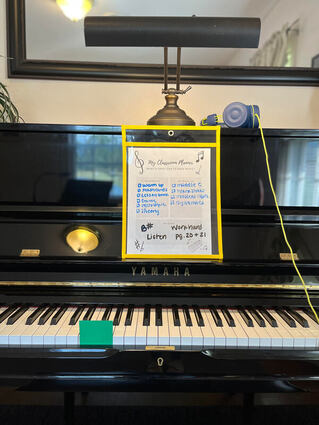 This post goes out to my fellow teachers who run a small private Music Studio. If it's one thing I've learned since teaching, people love routine and organization. If you are constantly changing your schedule or cancelling and rescheduling lessons, you may find yourself struggling to keep students. Keep in mind that your parents & students already have a hectic schedule juggling jobs, school, family, a home, and after school activities. They crave a routine and when you provide that sense of organization, you build on so much more--making your business more dependable.
Same thing goes for your classroom. When you stay organized and your students know/understand the routine, your classes will run efficiently. I found these amazing dry erase sleeves at Walmart and they have transformed the way my classrooms run! I've found that kids LOVE to check off once they have completed a task. I've also noticed that when students set their own goals, they are more willing to put in the effort to achieve them (: 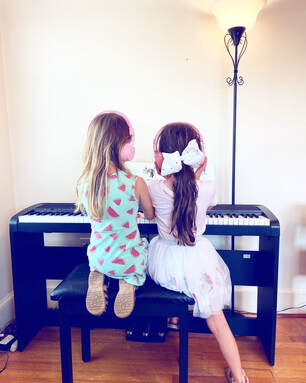 I'm going into this blog with an open mind as I do not have any children of my own...this is just a thought I had based off of personal experiences. We have many parents and students who come to us and say something along the lines of: we need to take a break, it's just too much right now. We completely understand how hard it is to maintain a routine when you have a lot going on. Especially with school and other extra curricular activities.
When I'm approached with statements such as this one, I have so many questions. And the questions arise in my brain because I know what it's like to stay busy every single day. Growing up, Monday-Friday my schedule looked a little like this: Wake-up 5 am, 5:30 am swim practice, 7 am breakfast (in the car), 7:30 am go to school, 2:50 pm leave school, 3:30 pm ANOTHER swim practice, 6 pm go home eat dinner, 7 pm homework & practice piano/violin/viola, 10 PM sleep and then wake up the next day at 5 am to do it all over again. Now, I know everyone is different and we all can't handle the same schedules but the direction I think I'm going in is that it was the best thing my parents did for me. Now that I'm an adult, maintaining that busy routine and working my butt off really paid off for what the real world has shown me so far. It wasn't easy, but I'm so glad I stayed active. It taught me how to manage time, how to get things done, how to focus. Not only that, school was stressful...I loved it, don't get me wrong, but I would much rather have swum and played instruments all day long -- swimming and music didn't stress me out. If anything, they were outlets to relieve stress. I know I'm a bit biased. I do run a Music Business and I would love to have all the students in the world. BUT, don't strip away extra curricular activities when stress seems to rule your world. They actually might be helping you out more than you know (: We know a lot of families postpone joining a music program during the summer. There are vacations to work around, swim team, and let's face it....school's out and we're all looking forward to that break. Plus, music lessons are hard work, right? And, who wants to have to nag their kids to practice all summer? Surely, that kind of commitment and discipline can wait until school starts. Summer is for....wait for it...PLAYING! Hmmmmm? The best reason for music in the summer is...music is PLAY! That's right -- it's "playing". At The Music Studio, the required practice takes place during the lesson. What we want students to do at home is play, create, explore, and have fun! Gone are the days of having to beg your child to practice. Instead, ask them to give you a performance at home (kids love to show Mom and Dad what they can do!). And, playing gets results. Here's some proof of what happens when kids have time to simply enjoy and have fun with their music. This is our student, Emma...she plays for fun and relaxation (but you'd never know it!). No one has to remind her to practice...but lots of people ask her to play: What most people don't know (this is 35 years of business and teaching experience talking here) is that Summer is actually the absolute best and most strategic time for music!
|
AuthorYour teachers here at The Music Studio want to share their insight on our Music Lessons and provide the tips and tricks needed for a successful music education! Archives
October 2023
Categories |
 RSS Feed
We Would Love to Have You Visit Soon!
|
Telephone |
|
Hours:M-F, Saturday & Sunday: by appointment only
Phone Hours: M-F 10:00am to 5:00pm Teaching Hours: M-Th 3:00pm - 8:30pm |